Goldsmiths Artsmark Learning Programme: What we’ve learned (so far)...
Since September 2023, Goldsmiths, University of London has designed and taught the national learning programme for Artsmark, Arts Council England’s cultural education programme for schools. Here, Professor Tara Page, who leads the programme at Goldsmiths, shares some insights from the work so far.
_____
After two years of teaching, reflection and a few thousand sandwiches over shared lunches, the Goldsmiths Artsmark Learning Programme (GALP) has taught us a lot. We’ve learned from teachers, from each other, and from the rhythm of the programme itself what sustains change. We’ve learned what helps creative and art education take root, and what happens when professional learning is designed not as delivery, but as a living system of care.
Across more than 2,000 teachers and 1,000 schools, the lesson has been consistent: professional learning works best when it’s lived, not delivered.
1. Teachers are astonishing
Teachers go above and beyond every day. They make creative learning happen in corridors, community halls and classrooms, often with little more than imagination and trust. What they need most is not more to do, but space to do what matters.
Structured around two core modules and a wider support offer for Artsmark schools, teachers describe GALP as ‘time to think deeply’ and ‘a chance to plan and reflect with colleagues’. 95% percent said self assessment deepened their understanding of their school community, and almost all said it strengthened their confidence to identify meaningful change goals. These aren’t satisfaction scores; they’re traces of agency. They show teachers leading inquiry, not following templates.
2. Reflection is the action
One of our clearest lessons has been that critical reflection isn’t the pause between actions; it is the action.
Every module we deliver builds on this principle. Teachers begin by examining their context, move into action through collaborative inquiry, and return to reflect on what has changed. Across all three stages – Introduction, Making Change, and Impact of Change – reflection sustains the pulse of the programme.
Teachers told us that ‘protected time to think’ was essential to making change real, and that collaboration was ‘the hardest part but also what makes the work doable’. These comments have shaped how we design. Reflection and collaboration aren’t add-ons; they are the methodology.
3. Care is structural…
One of the programme’s founding principles is simple: if we say we value care, we have to build it into the structure.
That means module sessions take place during the school day. Teacher’s module evaluations and feedback help to inform and remakes the next year’s content, design, resources. When teachers requested support materials for analysing data, we co-created them. When feedback tells us something’s not landing, we change it.
Care, here, is not a sentiment. It’s the architecture of the programme. As one teacher said: ‘It’s a space where we can listen and are listened to.’
4. …and listening is method
We’ve learned that evaluation is not an afterthought; it’s a practice of listening.
Teachers’ reflections are read not as performance data, but as relational traces, signs of what’s working, what’s needed, and what’s emerging.
That’s how the programme has evolved: each year breathing, adjusting, learning with teachers.
5. Data tells stories, not scores
Data is too often used as proof of compliance, something collected for inspection, not understanding. In the GALP, data is a language of care.
At the end of the Artsmark journey, schools use the data they have collected over the two years to write their Statement of Impact. And teachers on the programme use data to notice: whose voices are missing; whose experiences are at the edges; what stories still need to be told. By the end of the GALP Impact of Change module, 96% of teachers reported identifying clear areas of impact, and 91% said they were planning to collect or change data methods for the next phase. These aren’t numbers for audit; they’re markers of curiosity. They show teachers using data to make sense of their communities and to tell stories that matter.
6. Place matters
Place changes everything. The further north you go, the thicker the bread over our shared lunches, and the strong sense of community.
Each region brings its own pulse: rural schools working with local artists, coastal communities linking creativity to environment, urban schools reframing curriculum through culture. This national learning programme only works because it feels local. As one teacher put it: ‘It’s the same, but never the same again.’
This matters. Consistency gives stability, but difference keeps the work alive.
7. Creativity is contagious
Once creativity takes hold, it moves. Teachers begin to lead inquiry groups; pupils take ownership of projects; leadership teams reimagine priorities. It ripples outward, often quietly, but unmistakably.
Teachers describe ‘new conversations with senior leaders’; ‘confidence to analyse and advocate’, and ‘renewed energy for the arts’. The impact goes beyond the award itself; it changes how schools see themselves.
8. Sustainability comes from care
In education, sustainability is often confused with endurance: just keeping going. But what we’ve learned is that sustainability lives in care, in systems that listen, share responsibility and pace themselves with attention.
The Goldsmiths Artsmark Learning Programme has grown each year, but it hasn’t rushed. It moves to a steady rhythm: Introduction, Change, Impact. A rhythm that holds reflection and renewal at its core.
What we’ve really learned
We’ve learned that teachers’ capacity for change grows when systems slow down enough to listen. We’ve learned that creative professional learning can be rigorous and relational. We’ve learned that place, context and care are the ground that the programme grows and thrives from.
Find out more about the Goldsmith Artsmark Learning programme on the Artsmark website: artsmark.org.uk
About the author
Tara Page is Professor of Pedagogy and Praxis at Goldsmiths, University of London. Their work centres creativity, care, and teacher-led inquiry as ways of remaking learning. They are interested in how change happens in practice, through attention, relationship, and place, and how arts education can shift what becomes possible in schools.
Image
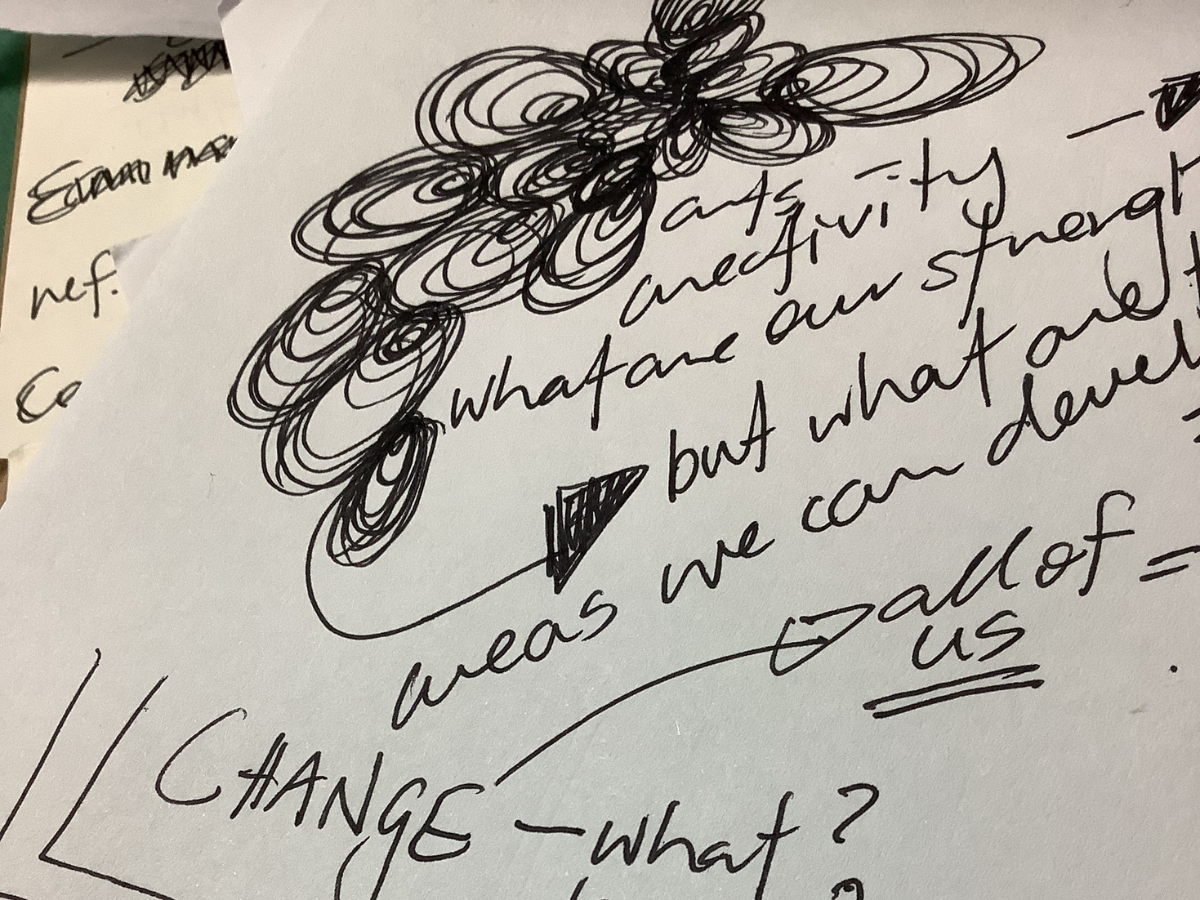
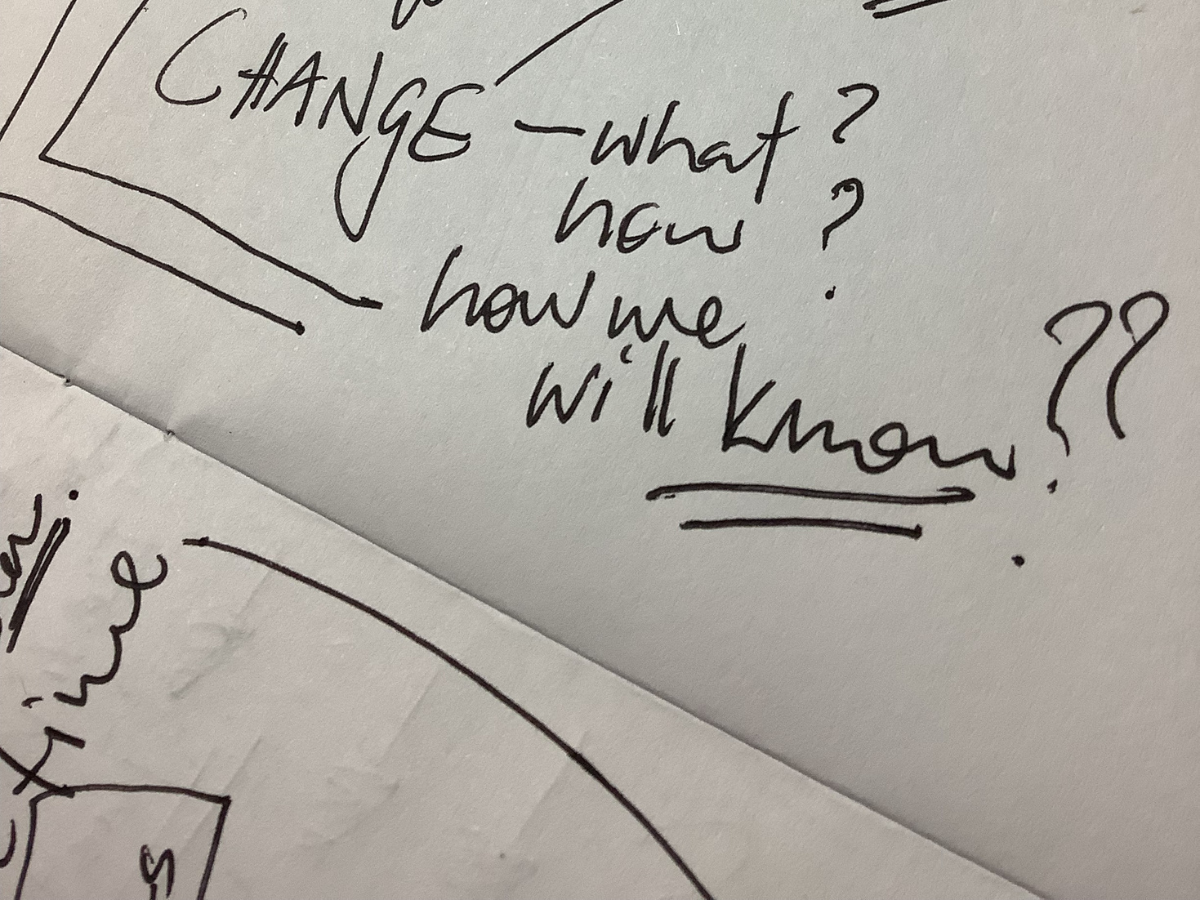
GALP: Mapping strengths, questions and possibilities. Photo © Tara Page (2025).
Note
The quotations cited in this blog are drawn from internal evaluation data collected as part of the Goldsmiths Artsmark Learning Programme (2023–2025), including teacher feedback and module evaluations from participating schools.